Blue Jacaranda / Jacaranda mimosifolia
- Giancarlo Maurici
- Sep 25, 2025
- 3 min read

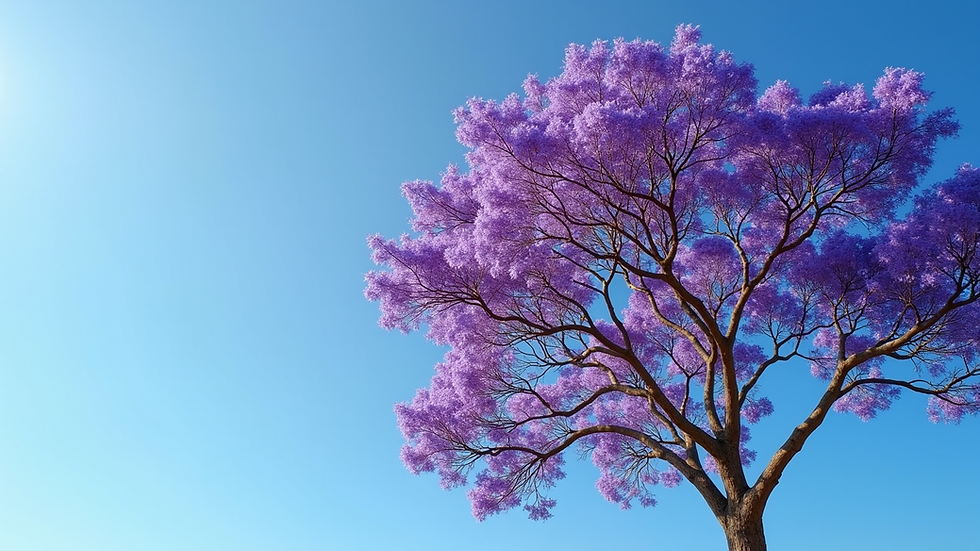
The Blue Jacaranda, scientifically known as Jacaranda mimosifolia, is a breathtaking tree that enchants people with its vibrant purple-blue flowers. Originally from South America, this stunning tree has traveled worldwide, enhancing parks, streets, and gardens with its beauty. In this post, we will examine its origins, cultural significance, identifying features, fruit, medicinal value, and the wildlife that interacts with this remarkable tree.
Roots in South America
The Blue Jacaranda thrives in the tropical and subtropical climates of South America, especially in countries like Brazil, Argentina, and Paraguay. This tree flourishes in warm weather and well-drained soil, reaching heights of 15 to 25 meters. It was introduced to regions like Australia, South Africa, and the United States in the 19th century for ornamental purposes. For instance, in Sydney, Australia, the Blue Jacaranda has become synonymous with spring, creating a stunning spectacle when its blossoms cover the city in purple hues.
Significance Across Cultures
The Blue Jacaranda has a rich cultural significance in different communities. In Brazil, it symbolizes the arrival of spring, bringing joy and beauty. Pretoria, South Africa, is famously known as the "Jacaranda City" because of the numerous Jacaranda trees lining its streets, with an estimated 70,000 trees enriching the landscape.
The tree is often planted to commemorate loved ones or celebrate special occasions. Its vibrant flowers symbolize renewal and hope, making it a thoughtful choice for memorials and celebrations alike.
Distinctive Features
Identifying the Blue Jacaranda is easy due to its unique characteristics. The tree showcases a broad, spreading canopy filled with delicate fern-like leaves, which can grow up to 45 cm long.
Its most eye-catching feature is the trumpet-shaped flowers, typically a bright purple-blue color. These blooms appear in clusters from late spring to early summer, creating a magnificent contrast against the green leaves. The display of flowers can be so plentiful that they often make entire streets look like they are draped in vibrant purple.
Unique Fruit and Seeds
The Blue Jacaranda produces a distinctive fruit that is often overlooked. The fruit, a woody capsule, can grow up to 5 cm long and contains flat, winged seeds. These seeds are dispersed by the wind, allowing the tree to spread and thrive in new areas.
While not typically eaten by humans, these seeds are vital for the ecosystem. They provide food for various birds and small mammals, playing a crucial role in local biodiversity.
Traditional Medicinal Uses
Interestingly, parts of the Blue Jacaranda have been used in traditional medicine. For example, some cultures have used the leaves and bark for various health benefits. Research suggests that extracts from the leaves may have anti-inflammatory and antioxidant properties.
In folk medicine, the Blue Jacaranda has been used to treat ailments such as fevers and respiratory issues. However, it is essential to approach these claims with caution; more scientific research is needed to fully understand its medicinal value.
Support for Wildlife
The Blue Jacaranda is not just a beautiful tree; it supports local wildlife in significant ways. The flowers attract a variety of pollinators, including bees and butterflies. These pollinators are crucial for maintaining healthy ecosystems.
Birds are also drawn to the tree, especially during the fruiting season when they feast on the seeds. The Blue Jacaranda provides essential shelter and nesting sites for various bird species, making it an important habitat in both urban and rural landscapes.

Reflecting on the Beauty of the Blue Jacaranda
The Blue Jacaranda (Jacaranda mimosifolia) is more than just a decorative tree; it embodies beauty, cultural significance, and ecological importance. Its origins in South America have led to its global popularity, enchanting countless people with its stunning blooms and graceful form.
From its symbolism of hope to its role in supporting wildlife, the Blue Jacaranda deserves our attention. Whether you see it in a park, along a street, or in your garden, take a moment to appreciate its beauty and the life it nurtures. As we continue to explore the natural world, let us remember the significance of trees like the Blue Jacaranda in our ecosystems and communities.
Next time you see a Blue Jacaranda in bloom, pause to admire not just its beauty, but also the rich history and ecological impact it has in our lives.


Comments